Myanmar Population & Ethnic Groups Explained
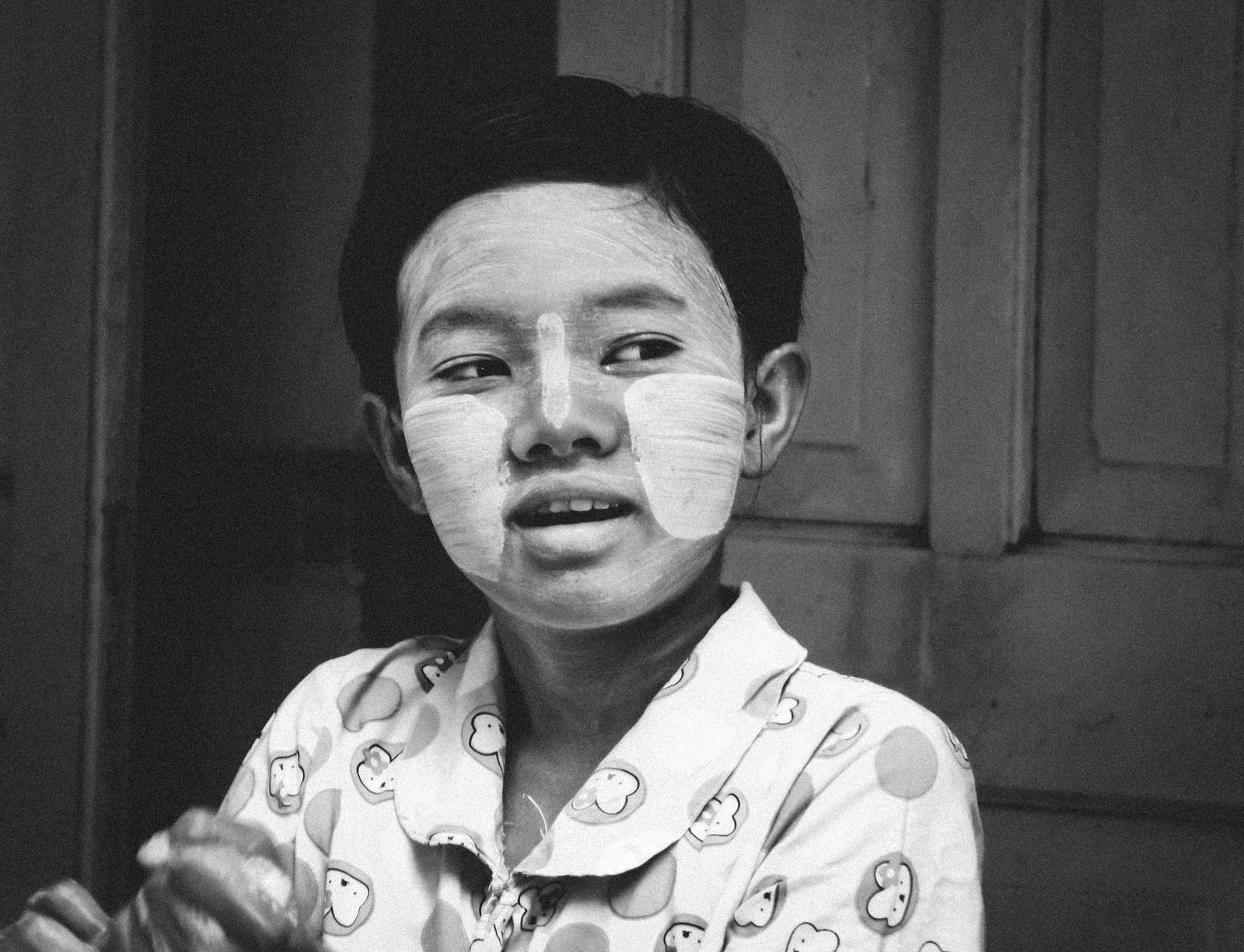
Photo: Rostyslav Savchyn (Pexels)
Myanmar is one of the most ethnically and linguistically diverse countries in Southeast Asia. The myanmar population is composed of dozens of distinct ethnic groups speaking well over a hundred languages and dialects — a complexity that shapes the country’s culture, its geography, its history, and its ongoing political life. This overview explains who lives in Myanmar, how the population is distributed, and what visitors and researchers should understand about the country’s ethnic and religious landscape.
Myanmar Population: An Overview
According to estimates from the United Nations and World Bank, Myanmar is home to tens of millions of people, placing it among the larger countries in Southeast Asia by population. The most recent census data available before the disruptions of 2021 indicated a population of roughly 54 million, though subsequent surveys and displacement have introduced significant uncertainty into current estimates. Any specific figure should be treated as approximate; conditions on the ground have shifted considerably.
The population is unevenly distributed across the country’s varied terrain. The greatest concentrations are in the central lowlands — particularly the Ayeyarwady (Irrawaddy) delta region, the Mandalay–Yangon corridor, and the Sittwe coastal area — while highland states such as Chin, Kachin, and Kayah are relatively sparsely populated. Yangon remains the largest urban centre by a significant margin; Mandalay is the second city.
According to World Bank data, Myanmar’s urbanisation rate has been rising gradually over recent decades, though the country remains predominantly rural. A large proportion of the working population is engaged in agriculture, with rice cultivation dominant in the delta and lowland regions.
The Major Ethnic Groups of Myanmar
The Government of Myanmar has historically recognised 135 officially listed ethnic groups, though this categorisation is contested — both the number and the groupings are debated by scholars and community representatives. The major umbrella groups recognised officially are:
- Bamar (Burman)
- Chin
- Kachin
- Kayah (Karenni)
- Karen (Kayin)
- Mon
- Rakhine (Arakan)
- Shan
These eight groups broadly map onto the seven ethnic states on Myanmar’s administrative map (see our Myanmar map guide for the full state and region breakdown).
The Bamar (Burman) People
The Bamar — also written as Burman — are the largest single ethnic group and form the majority of Myanmar’s population. According to general estimates, they represent well over half the total population, though precise figures vary depending on source and methodology. The Bamar have historically occupied the central lowlands: the Ayeyarwady River valley, the area around Mandalay, and the Yangon region.
The Burmese language (the official language of Myanmar) is the Bamar people’s mother tongue and serves as the lingua franca for inter-ethnic communication across the country. Theravada Buddhism has been central to Bamar culture for centuries, and most of Myanmar’s major historical dynasties — Pagan, Ava, Toungoo, Konbaung — were Bamar-led.
Understanding the relationship between the Bamar majority and the country’s ethnic minorities is important context for understanding Myanmar’s modern political history, including the long-running conflicts in border regions.
The Shan People
The Shan are the second-largest ethnic group and are concentrated in Shan State, the largest of Myanmar’s states, which borders China, Laos, and Thailand. The Shan are Tai-Kadai people and speak Shan, a language more closely related to Thai and Lao than to Burmese. Shan State is itself highly diverse, encompassing many smaller sub-groups including Pa-O, Palaung (Ta’ang), Danu, and Intha (the traditional lake-dwelling community of Inle Lake).
The Shan Plateau — much of which sits at altitude — gives the region a noticeably different climate and landscape from the lowlands. Taunggyi is the state capital; Nyaung Shwe is the gateway town for Inle Lake, a major destination for travellers.
The Karen (Kayin) People
The Karen are one of Myanmar’s largest minority groups and live primarily in Karen (Kayin) State in the southeast, as well as in parts of Bago Region and across the border in Thailand. The Karen are not a single ethnic unit; they comprise multiple sub-groups with distinct languages and traditions, the largest being the Sgaw Karen and Pwo Karen.
Hpa-An, the capital of Karen State, has become increasingly popular with independent travellers drawn by its limestone karst scenery, caves, and proximity to the Thai border at Myawaddy.
The Mon People
The Mon are one of the oldest peoples in mainland Southeast Asia and are credited with transmitting Theravada Buddhism and Brahmic writing systems to the Bamar in the early centuries of recorded Burmese history. Mon State lies in the south along the Gulf of Martaban and borders Thailand. Mawlamyine (Moulmein) is the Mon State capital.
The Mon language, part of the Austroasiatic family, is still spoken — particularly among older generations — though many Mon people today also speak Burmese.
The Kachin People
Kachin State, in the far north of Myanmar bordering China and India, is home to the Kachin people — an umbrella group that includes the Jingpho, Zaiwa, Lisu, Rawang, and others. The region is mountainous and is the source of the Ayeyarwady River at its two tributaries. Kachin State is rich in jade, amber, and gold deposits.
The Kachin have a significant Christian population, the result of missionary work in the late 19th and early 20th centuries — giving the region a distinctly different religious character from Buddhist-majority Myanmar.
The Rakhine, Chin, and Kayah People
The Rakhine live along Myanmar’s western coast in Rakhine State, facing the Bay of Bengal; they are Theravada Buddhist and the ancient Rakhine capital of Mrauk-U holds some of Myanmar’s most significant ruins. The Chin occupy the remote northwest highlands bordering India — a highly fragmented group of many sub-groups with distinct languages; the area is among the least-visited in the country. The Kayah (Karenni) of Myanmar’s smallest state border Thailand and include the Kayan sub-group, known internationally for the brass neck ring tradition of Kayan Lahwi women. That tradition is culturally complex — respectful engagement with Kayan communities means approaching it with genuine curiosity rather than treating it as spectacle.
Languages of Myanmar
The official and dominant language is Burmese (Myanmar language), spoken natively by the Bamar and as a second or third language by most of the rest of the population. Beyond Burmese, the country is home to a remarkable linguistic diversity:
- Shan is spoken by millions in Shan State and is part of the Tai-Kadai family.
- Karen languages (Sgaw, Pwo, and others) are spoken in Karen State and parts of Bago.
- Kachin languages include Jingpho and several others in the far north.
- Mon is an Austroasiatic language still spoken in Mon State and parts of Bago.
- Chin languages are numerous — some villages just hours apart speak mutually unintelligible tongues.
- English is taught in schools and is functional among those in the hospitality and business sectors in major cities.
For a practical phrasebook of basic burmese phrases, see our Burmese language guide.
Religion in Myanmar
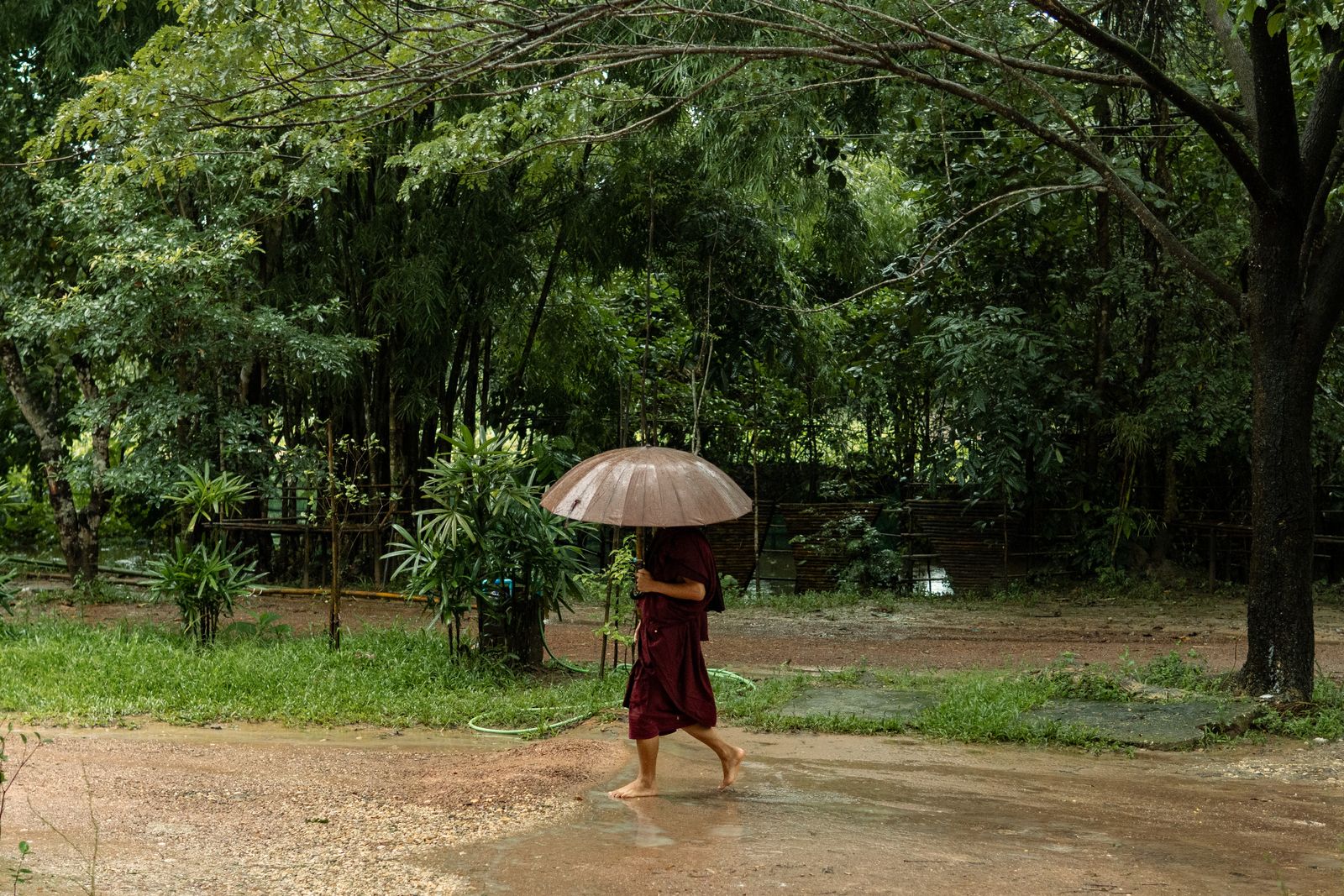
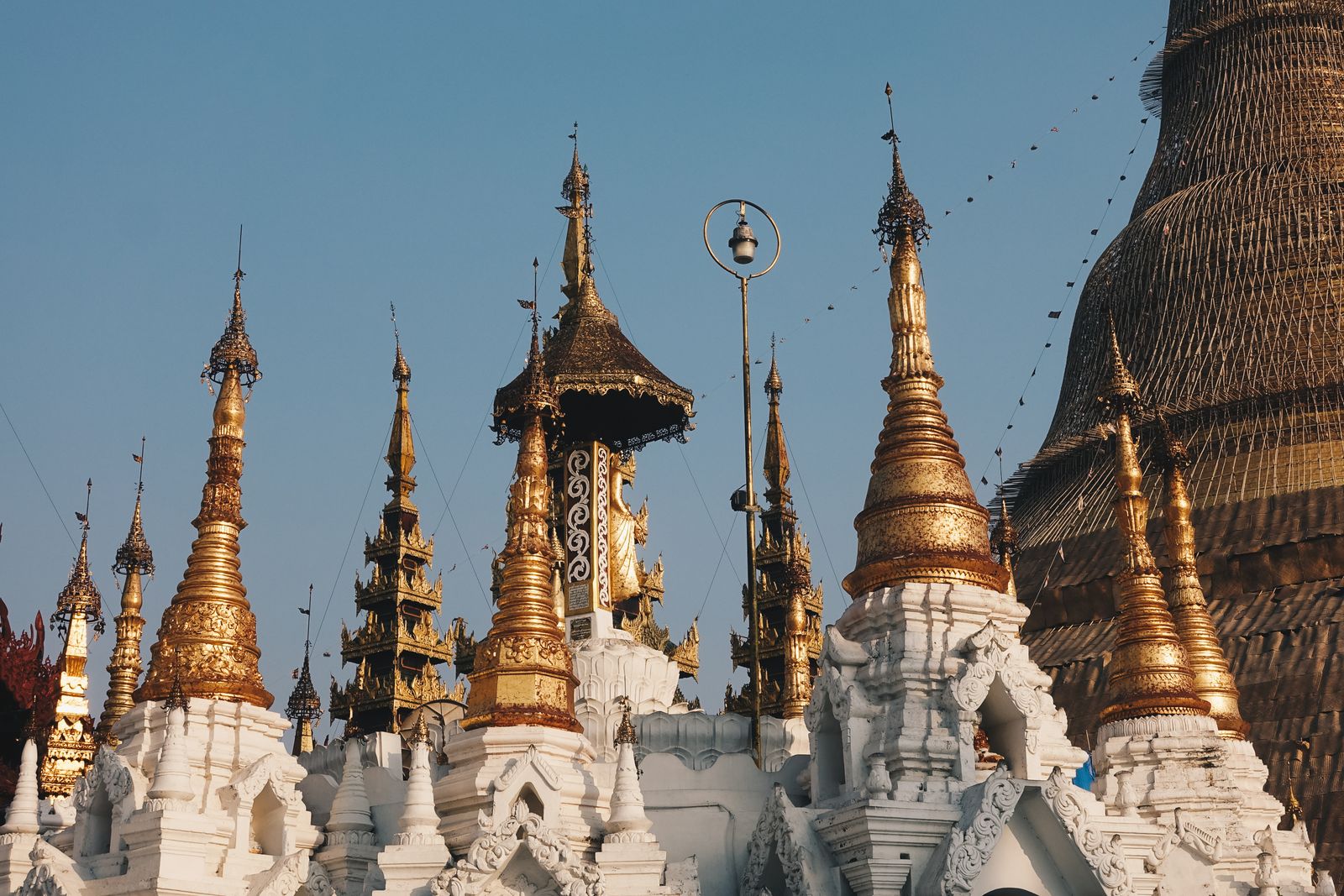
Theravada Buddhism is the dominant religion and plays a central role in daily life, art, architecture, and the annual festival calendar. According to general census data, a large majority of the population — in the region of 87–88 percent, according to the most recent available figures — identifies as Buddhist. The country has more than 500,000 monks and novices, and monasteries (kyaungs) are present in virtually every town and village.
| Religion | Primary communities |
|---|---|
| Theravada Buddhism | Bamar, Shan, Mon, Rakhine, Karen (partially), and others |
| Christianity | Kachin, Chin, Karen (partially), and some Kayah communities |
| Islam | Some communities in Yangon, Rakhine State, Mandalay |
| Hinduism | Smaller communities, historically in urban centres |
| Animism / traditional beliefs | Certain highland communities alongside or instead of other faiths |
Religion in Myanmar is a sensitive topic with political dimensions. Interactions at monasteries, pagodas, and places of worship should always be approached with respect. For guidance on dress and behaviour at religious sites, see our overview of things to do in Myanmar and the guide to the Myanmar longyi — the traditional garment required at many pagodas and temples.
Ethnic Diversity and Practical Travel
For visitors, Myanmar’s ethnic diversity is one of the country’s most compelling features. Travelling between regions is, in a real sense, travelling between distinct cultures. The market at Inle Lake reflects Shan, Pa-O, and Intha traditions. The weaving villages outside Mandalay are distinct from those near Bagan. The food, music, dress, and calendar of Karen State differ markedly from those of Yangon.
At the same time, it is worth approaching the topic with some care. Certain communities have experienced significant displacement and hardship. Others have been marketed as “tribal” attractions in ways that can feel reductive. The best approach is the same one that works anywhere: be curious, be respectful, and let communities define how they want to be engaged with.
FAQ
What is the population of Myanmar?
According to United Nations and World Bank estimates, Myanmar’s population is in the range of tens of millions — the most recent pre-disruption census (conducted in 2014) recorded approximately 54 million people. Current figures carry considerable uncertainty due to displacement and changed data-collection conditions since 2021. Any specific current number should be treated as an approximation.
What is the largest ethnic group in Myanmar?
The Bamar (also written Burman) are the largest single ethnic group, generally estimated to represent well over half of the total myanmar population. They are concentrated in the central lowlands and speak Burmese, the country’s official language. The Shan are generally considered the second-largest group.
How many ethnic groups are in Myanmar?
The Myanmar government officially recognises 135 ethnic groups, organised under eight major national races: Bamar, Chin, Kachin, Kayah, Karen, Mon, Rakhine, and Shan. This classification is contested by some scholars and community representatives, who argue it both over-simplifies and sometimes artificially divides cultural communities.
What religion do most people in Myanmar follow?
Theravada Buddhism is the religion of the large majority of the myanmar population — generally estimated at around 87–88 percent based on census data. Christianity is significant among Kachin, Chin, and some Karen communities. Islam is practised by communities in Yangon, parts of Rakhine State, and Mandalay. Animist and traditional belief systems coexist with formal religions in some highland communities.
What language do people speak in Myanmar?
Burmese (Myanmar language) is the official language and is understood across the country. Beyond Burmese, more than a hundred languages and dialects are spoken by Myanmar’s ethnic minority communities, including Shan, Karen languages, Kachin languages, Mon, Rakhine, and the many distinct Chin languages. In tourist areas, English is commonly understood by those working in hospitality.